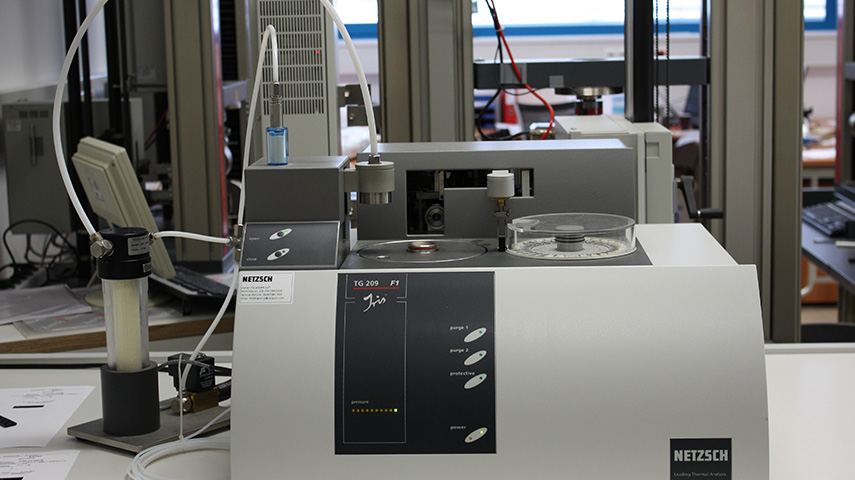
The Role of Fillers (Calcium Carbonate) in Geomembranes – Hidden Quality Risks
Another critical but often overlooked aspect in low-cost geomembrane production is the use of mineral fillers, particularly calcium carbonate (CaCO₃). While fillers are common in many less critical applications such as food bags and automotive parts, their use in geomembranes for environmental protection, and critical infrastructure applications represents a significant quality and performance risk.
Calcium carbonate is primarily added to polymers to reduce material cost, increase stiffness, and improve processing behavior. However, geomembranes are not structural plastics designed for stiffness optimization—they are engineered as barrier systems designed for long-term durability, flexibility, chemical resistance, and resistance to environmental stress cracking.
From a microstructural perspective, calcium carbonate particles act as discontinuities within the polymer matrix. These interfaces induce stress concentration under mechanical load and thermal movement, significantly increasing the probability of crack initiation and propagation. In aggressive chemical environments, these interfaces also become preferential diffusion paths, undermining the barrier function of the geomembrane.
In containment systems, landfills, mining applications, water reservoirs, and industrial lining systems, geomembranes are expected to maintain integrity for decades. Any material modification that introduces internal heterogeneity directly contradicts this fundamental performance requirement.
For this reason, the use of mineral fillers such as calcium carbonate in geomembranes should be considered a cost-driven compromise rather than a performance-driven design choice