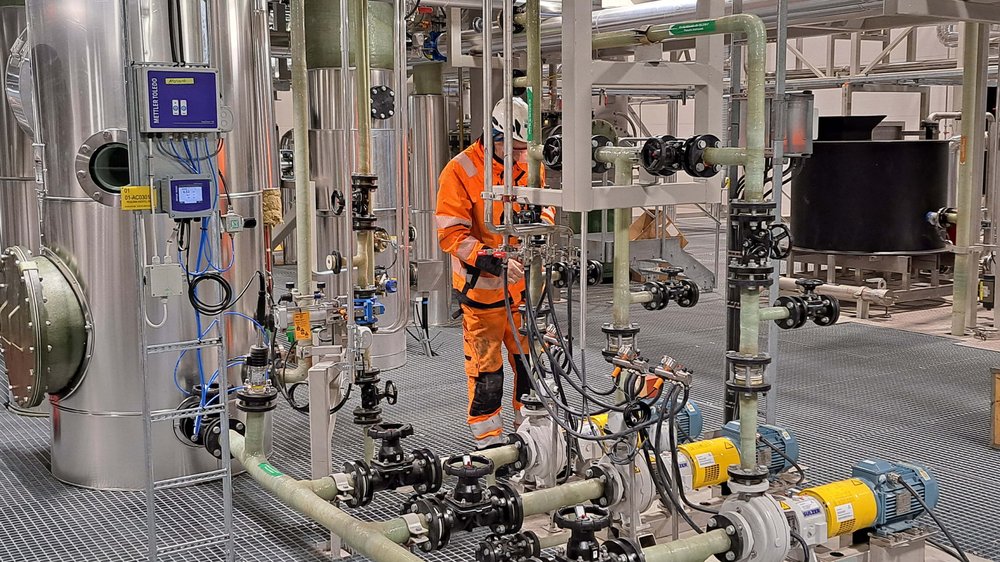
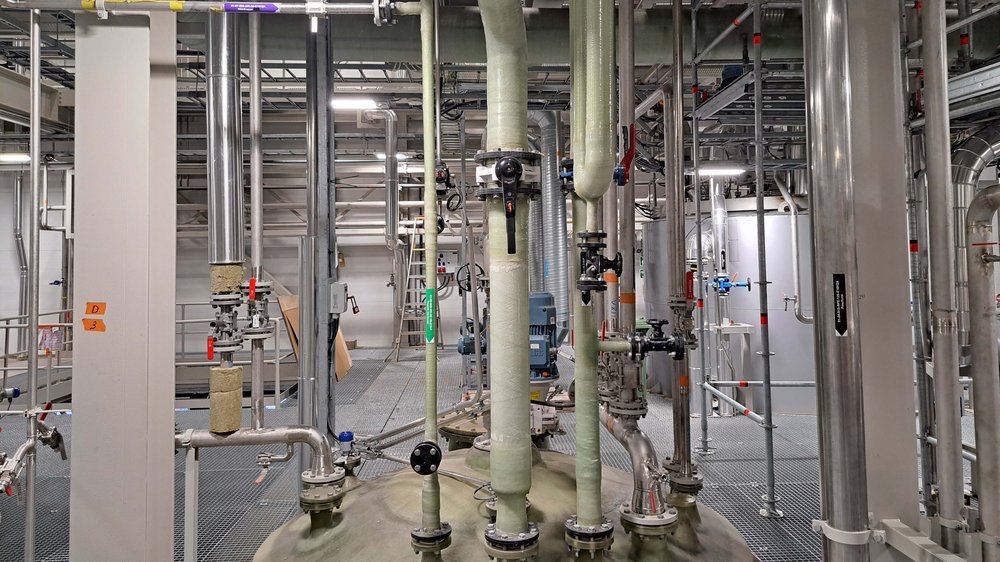
Piping systems installed:
AGRUCHEM piping systems for the recirculating water of the flue gas cleaning system, including temperature control, heat recovery, and the chemical recycling of process chemicals. The exhaust gases generated during the extraction processes were collected via piping systems and conveyed to a treatment plant. Pipe sizes ranging from DN25 to DN500 were used.
Material selection:
Material selection was based on factors such as operating conditions, chemical resistance, and UV resistance. Notably, the chosen material was a glass fiber-laminated polypropylene, emphasizing a shift away from traditional metal pipelines. The material's dual-laminate construction offers significant advantages:
Corrosion Resistance: Depending on the medium and operating conditions, glass fibre-reinforced polypropylene pipes can offer a longer service life and reduced maintenance requirements compared with metal pipes.
Easy Installation: These pipes are notably lighter than metal, simplifying installation and transport. The installation process, including support clamps, is faster and easier than with standard polypropylene pipes. Leak Detection: The dual-lamination system allows for easy identification of potential leaks through the visible glass fiber laminate.
Thermal Dimensional Stability:Glass fiber limits thermal expansion, ensuring excellent dimensional stability, even with temperature fluctuations.
Leveraging their extensive experience and expertise accumulated over the years, AGRU has the capability to translate this knowledge into precise assessments of material performance under working conditions, offering tailored recommendations for each pipeline.
Installation
The installation process involved two key phases:
Preliminary lamination work was carried out at Atolli's warehouse, optimizing time and reducing costs. This phase was executed using specialized machines and certified welders.
Remaining lamination was conducted post-welding to cover the plastic welding seams, ensuring adherence to industry standards and material certifications.
The butt-welding method was employed for joining the plastic pipes, adhering to DVS guidelines, which provide detailed instructions for butt-welding plastic pipes, including preparation, welding parameters, and quality control.
Atolli managed the installation process, including planning, coordination, and execution. Their extensive experience in plastic piping installation projects ensured the project's success, from design to installation. Their certified professionals adhered to the latest industry standards, offering customized solutions that met specific project requirements, ensuring the system's reliability.
The installation of the polypropylene glass fiber laminated piping system in the battery recycling factory played a vital role in safeguarding worker safety and environmental preservation. The polypropylene pipes' chemical resistance contributed to the system's extended longevity, making it a cost-effective solution for the industrial context.
The Finnish Safety and Chemicals Agency (Tukes) enforced the Pressure Equipment Directive (PED) I in Finland, overseeing safety standards for pressure equipment and pipelines used in the chemical industry. In compliance with these regulations, Plasthouse Oy provided comprehensive documentation for every installed pipeline, including material and welding certificates, drawings, safety documents, welding and testing reports, all delivered to the customer upon project completion, ensuring compliance with Tukes regulations.