Initial Situation: Leakage in Existing FRP Pipeline
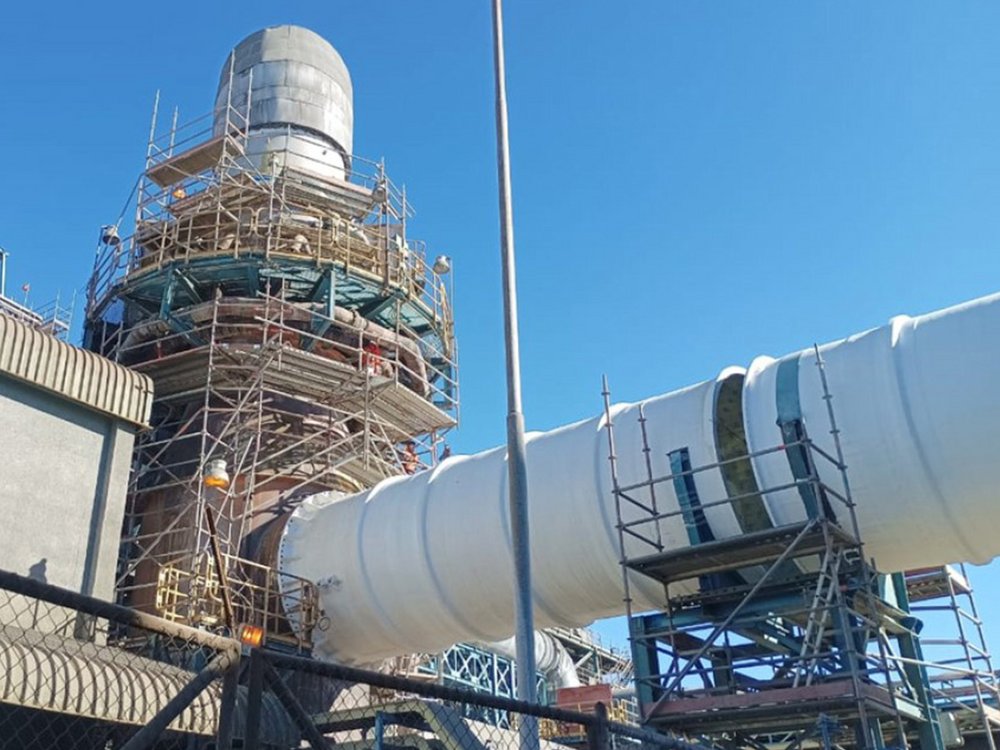
At an industrial plant in South America, corrosive flue gas containing approximately 10 % SO₂ is transported at temperatures of up to 90 °C through a high-velocity pipeline to a gas treatment system.
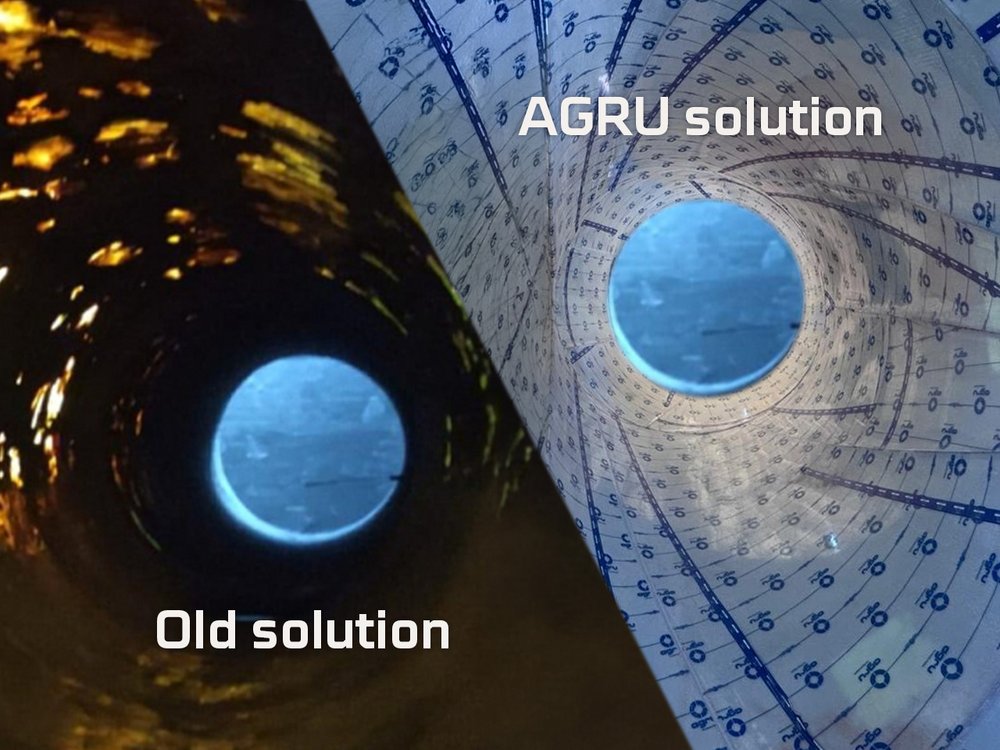
The original pipeline was entirely manufactured from fiberglass-reinforced plastic (FRP). After only a few years of operation, leaks occurred along the entire length of the pipeline.
Consequences included:
- recurring repairs
- increasing maintenance efforts
- plant downtime
- additional inspections and temporary fixes
These measures did not resolve the root cause of the failures.
Technical Requirements
The operating conditions placed significant demands on the piping system:
- Medium: SO₂
- Temperature: 90 °C
- Concentration: 10 %
- Operating pressure: 220 mmca (0.32 PSI / 22 mbar)
The combination of temperature and corrosive load exceeded the performance limits of the existing FRP system.
Solution: Dual Laminate Piping System Made of FRP and PVDF
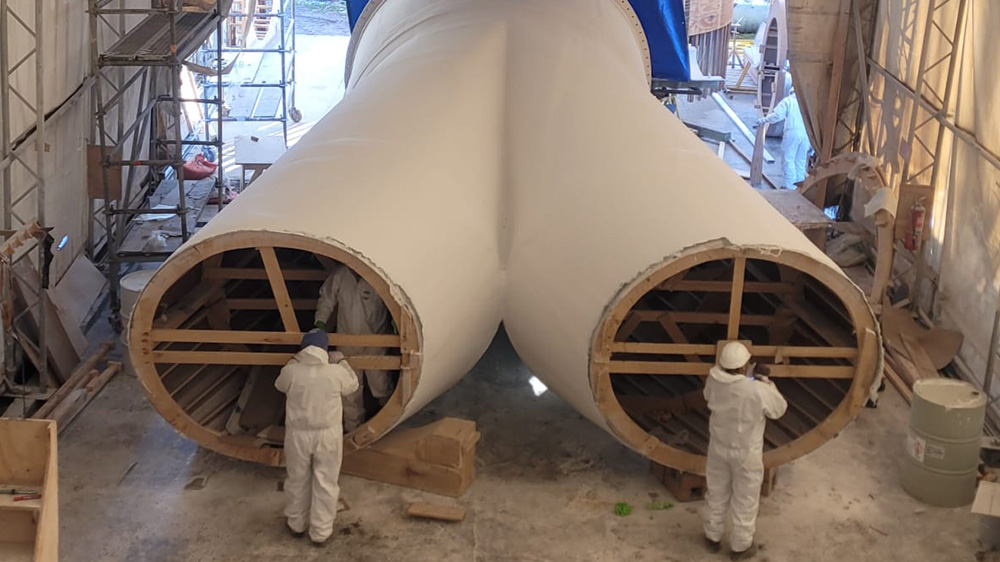
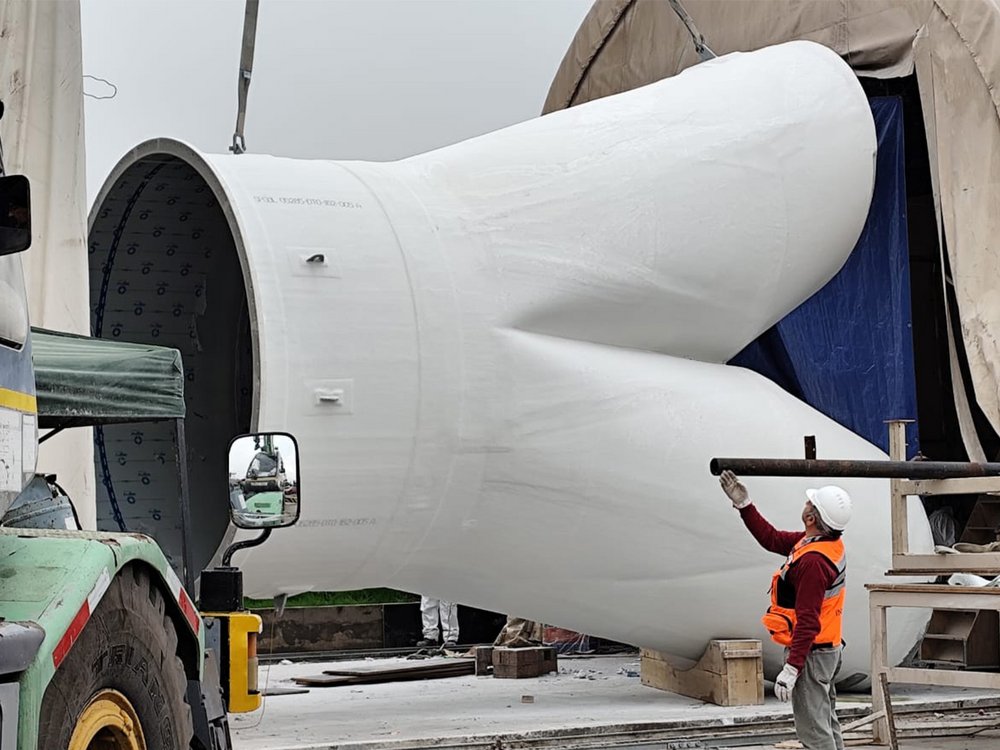
To replace the existing system, a dual laminate piping solution was implemented. This design combines the mechanical strength of FRP with the chemical resistance of thermoplastics.
The system design includes:
- Inner liner made of PVDF for chemical resistance and temperature performance
- Outer structural layer made of FRP
- Pipe construction based on laminated PVDF sheets
- Additional reinforcement using the filament winding process
The system was specifically engineered for the given operating conditions.
Result: Application-Specific Material Design for Reliable Operation
The new piping system is designed for continuous transport of corrosive flue gases. It addresses the chemical exposure from SO₂ as well as the elevated temperatures with a targeted material combination suited to the application.
The dual laminate solution provides a technically adapted approach to mitigate the previously observed material-related failures.
Get in touch with us!